
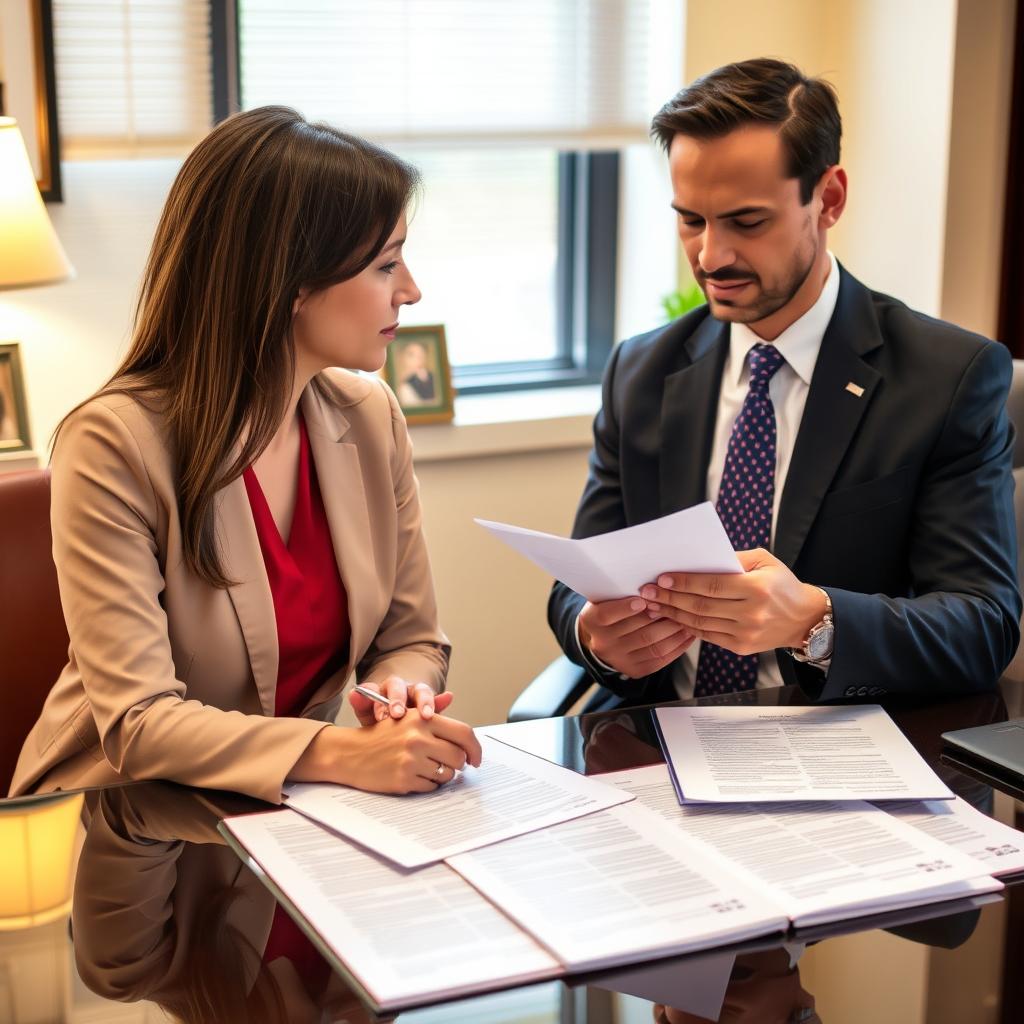
Recognition Of Foreign Divorce Lawyer Fairfax County, VA
If you obtained a divorce outside the United States and now need that decree enforced or recognized in Virginia, the process raises unique legal questions. Fairfax County residents whose marriages ended abroad may face issues involving property division, spousal support, or the ability to remarry. At Law Offices Of SRIS, P.C., Mr. Sris and his Of Counsel team help clients navigate the recognition of foreign divorce decrees in Fairfax County Circuit Court and related matters. Founded in 1997, our firm concentrates its practice on family law and has extensive experience handling cases that cross international borders. Reach our location at (888) 437-7747. Law Offices Of SRIS, P.C. – Advocacy Without Borders.
What Recognition Of Foreign Divorce Means in Fairfax County
When a couple divorces in a foreign country, the resulting decree is not automatically enforceable in Virginia. To have the divorce recognized locally, a party must petition the Fairfax County Circuit Court, which holds exclusive original jurisdiction over divorce matters under Va. Code § 20-96. The court examines whether the foreign proceeding respected due process, whether both parties had an opportunity to be heard, and whether the foreign court had proper jurisdiction over the marriage. Because Virginia is an equitable distribution state, the recognition of the divorce itself does not always resolve property division; separate action may be needed to address marital assets located in Virginia.
Fairfax County, home to a large international community, sees many cases involving divorces obtained in countries such as India, the Philippines, Mexico, and various European nations. The Circuit Court applies principles of comity — a doctrine of mutual legal recognition — to determine whether to give effect to the foreign decree. A foreign divorce recognized in Virginia allows the parties to remarry, enforced property settlement terms, and clarifies custody and support obligations. However, the process is not automatic; a detailed pleading and a full set of translated and authenticated documents must be presented to the court.
How Mr. Sris and His Of Counsel Handle Recognition Of Foreign Divorce Cases
Mr. Sris and his Of Counsel begin by reviewing the foreign divorce decree, the marriage certificate, and any related agreements. We assess whether the foreign court’s jurisdiction was proper and whether the procedures followed met basic fairness standards recognized by Virginia courts. Because many foreign decrees are in languages other than English, the firm works with certified translators to prepare admissible versions. We then file a petition with the Fairfax County Circuit Court, serving the other party as required under the Hague Service Convention or Virginia’s alternative service rules when the other spouse resides abroad.
If the other party contests recognition, Mr. Sris and his Of Counsel present evidence and legal argument to the court, addressing any procedural irregularities in the foreign proceeding. We also coordinate with foreign counsel when necessary to obtain additional documentation or to clarify points of foreign law. After the court enters an order recognizing the divorce, we assist clients with related family law matters, including equitable distribution of Virginia property and modification of custody or support arrangements that may flow from the newly recognized decree.
About Mr. Sris and His Of Counsel Team
Mr. Sris is the Owner and Founder of Law Offices Of SRIS, P.C. A former prosecutor, he founded the firm in 1997 and is admitted to practice in Virginia, Maryland, the District of Columbia, New Jersey, and New York. Mr. Sris testified before the Virginia House Courts of Justice Committee in support of 2019 HB 635 (chief patron Del. David Bulova). His experience spans complex family law matters, including international divorce recognition, equitable distribution, and custody disputes. Mr. Sris is supported by a team of Of Counsel attorneys who bring additional depth to cross-border family law cases. Together, Mr. Sris and his Of Counsel have handled family law matters across Northern Virginia and the greater Washington, D.C. Region for more than two decades.
Frequently Asked Questions
What is a foreign divorce decree?
A foreign divorce decree is a court order issued by a tribunal outside the United States that dissolves a marriage. The decree is binding in the country where it was issued, but it does not automatically have legal effect in Virginia. To enforce the terms of the decree—such as property division, spousal support, or a change in marital status—a Virginia court must enter an order recognizing the foreign judgment under the doctrine of comity. The Fairfax County Circuit Court examines the foreign proceeding for fairness and jurisdiction before granting recognition.
Do I need a lawyer to get a foreign divorce recognized in Fairfax County?
While no law requires you to hire an attorney, the recognition process involves procedural rules, evidentiary requirements, and international law considerations that are most effectively handled with experienced legal counsel. You must file a verified petition, attach certified copies of the foreign decree and translations, and prove that the foreign court had proper jurisdiction and that due process was observed. Mr. Sris and his Of Counsel have handled these cases and can guide you through each step at the Fairfax County Circuit Court.
How does the Fairfax County Circuit Court decide whether to recognize a foreign divorce?
The court evaluates whether the foreign divorce proceeding provided due process, whether the foreign court had jurisdiction over the parties, and whether recognizing the decree would violate Virginia public policy. The court may also consider whether both parties had notice and an opportunity to participate. Under Va. Code § 20-96, the Circuit Court has exclusive jurisdiction over the recognition of foreign divorces, and the judge applies principles of comity to decide whether the decree should be given full effect in Virginia.
What documents are needed to petition for recognition of a foreign divorce in Virginia?
Typically, you will need a certified copy of the foreign divorce decree, a certified translation if the decree is not in English, and proof that the foreign court had jurisdiction. Additional documents, such as the marriage certificate, the parties’ identification, and any separation or property settlement agreement, may also be required. The court may ask for an affidavit explaining the foreign legal process. Working with an attorney ensures that the petition is complete and that all documents meet the court’s evidentiary standards.
How long does it take to get a foreign divorce recognized in Fairfax County?
The timeline depends on the court’s calendar, whether the other party contests the petition, and whether additional documents must be obtained from abroad. Uncontested cases may be resolved in a matter of months once all paperwork is filed, while contested matters or those requiring service of process in a foreign country can take longer. Mr. Sris and his Of Counsel work to move the case forward efficiently while addressing any legal obstacles that arise.
Is a foreign divorce automatically recognized in Virginia?
No; a foreign divorce decree is not automatically recognized in Virginia. While the doctrine of comity generally favors recognition of valid foreign judgments, a party must take affirmative steps to have the decree recognized by a Virginia court. Until the Fairfax County Circuit Court enters an order recognizing the divorce, the marital status and the decree’s terms may remain unsettled under Virginia law.
If you would like to discuss the recognition of a foreign divorce in Fairfax County, take a look at our related pages:
- Family Law Lawyer Prince William County, VA
- Family Law Lawyer Stafford County, VA
- Family Law Lawyer Fauquier County, VA
- Family Law Lawyer Loudoun County, VA
- Family Law Lawyer Arlington County, VA
For further legal reference, consult these official Virginia resources:
Attorney advertising. Prior results do not guarantee a similar outcome.
Results may vary.
Case results depend on a variety of factors unique to each case.