
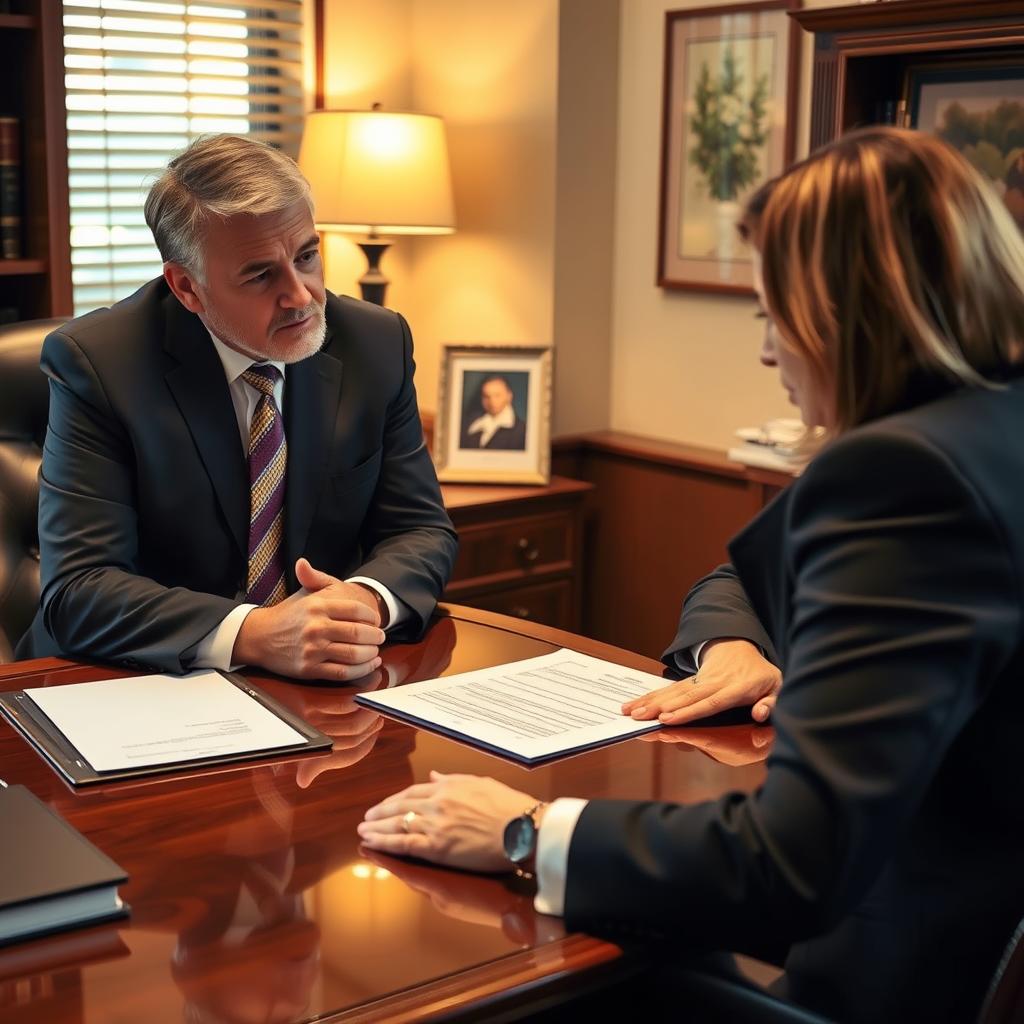
Postnuptial Agreement Lawyer Fairfax County, VA
You and your spouse are building a life together in Fairfax County—buying a home in Vienna, growing retirement accounts with federal or tech-sector earnings, and maybe starting a business in Tysons. You both agree that now is the right time to get your financial understanding in writing, not because anything is wrong but because you want clarity. A postnuptial agreement is a contract signed after marriage that defines property rights, spousal support expectations, and the division of assets should the marriage later end. In Virginia, these agreements are governed by the Premarital Agreement Act, Va. Code § 20‑147 et seq., which applies equally to postnuptial contracts. Getting it right matters, because a poorly drafted agreement can be set aside by the Fairfax County Circuit Court, located at 4110 Chain Bridge Road, Suite 210, Fairfax, VA 22030, which hears divorce and equitable distribution matters for the 19th Judicial District. Mr. Sris, Owner and Founder of Law Offices Of SRIS, P.C., and his Of Counsel have extensive experience drafting and litigating postnuptial agreements that hold up under Virginia’s equitable‑distribution framework. Reach Law Offices Of SRIS, P.C. at (888) 437‑7747 to schedule a consultation. Law Offices Of SRIS, P.C. – Advocacy Without Borders.
What Postnuptial Agreements Mean in Fairfax County, Virginia
Under Virginia law, a postnuptial agreement—like a premarital agreement—must be in writing and signed by both spouses. It can address the characterization and division of property, the payment of spousal support, and the disposition of assets at death. The same statutory framework, Va. Code § 20‑147 et seq., governs both pre‑ and postnuptial contracts, and Virginia courts interpret them under general contract principles. In Fairfax County, where many households have complex asset portfolios—government pensions, TSP accounts, stock options, real estate in multiple jurisdictions, and family‑held businesses—a well‑crafted postnuptial agreement provides predictability and reduces conflict. Because Virginia is an equitable distribution state, a Circuit Court judge will divide marital property fairly under the 11 factors listed in Va. Code § 20‑107.3 if there is no valid agreement. A postnuptial agreement displaces that default and allows spouses to decide for themselves what is equitable.
In Fairfax County, all matters involving equitable distribution, including enforcement of postnuptial agreements, are heard in the Fairfax County Circuit Court. The Juvenile and Domestic Relations District Court handles standalone child custody and support issues but does not have jurisdiction over property division. India is not a signatory to the 1980 Hague Convention on Civil Aspects of International Child Abduction. Our Fairfax location, at 4008 Williamsburg Court, Fairfax, VA 22032, is a short distance from the courthouse, making it convenient for clients across Fairfax, Burke, Centreville, Chantilly, Herndon, Reston, McLean, Vienna, Tysons, Oakton, Springfield, Annandale, and the Falls Church area. The firm is familiar with the local bench and bar, and Mr. Sris and his Of Counsel understand the procedural expectations of the 19th Judicial District—including the preference for thorough financial disclosure and the availability of pendente lite relief when enforcement issues arise during a pending divorce case.
Fairfax County General District Court is currently presided over by Hon. Michael Joseph Holleran. Court hours: Mon‑Fri 8:00AM‑4:00PM. Counsel appearing on family law matters should plan filings accordingly.
How Mr. Sris and His Of Counsel Handle Postnuptial Agreement Cases
Every postnuptial agreement case begins with a confidential conversation about your goals, your family’s financial picture, and any concerns that prompted the discussion. Mr. Sris and his Of Counsel then analyze the law to confirm that the proposed agreement meets Virginia’s requirements: it must be entered voluntarily, without duress or coercion, and each spouse must make a fair and reasonable disclosure of their assets and liabilities. Virginia courts will not enforce an agreement that is unconscionable when executed, and a spouse challenging the agreement has the burden of proving invalidity by clear and convincing evidence. Our approach is to build a record from the outset that supports enforceability—detailed financial schedules, correspondence documenting the negotiation timeline, and advice about the availability of independent legal counsel for each party. If both spouses are represented, we work collaboratively with opposing counsel, but we are prepared to litigate if an agreement is later challenged in the Fairfax County Circuit Court.
When a dispute arises after the agreement is signed—for example, one spouse alleges that the other failed to disclose a significant asset, or that changed circumstances make enforcement unfair—Mr. Sris and his Of Counsel draw on their litigation experience to protect the agreement’s validity. They are familiar with the discovery tools available in Virginia, including requests for production, interrogatories, and depositions, and they know how to present forensic accounting evidence to a judge. Because these cases often intersect with other family law matters, the team coordinates closely on any pending divorce, custody, or support issues to ensure that the agreement’s provisions are respected across the entire family law file. The timeline for resolving a contested postnuptial agreement depends on the court’s calendar and the complexity of the financial issues, but the firm works to resolve disputes as efficiently as the facts and the law allow.
About Mr. Sris and His Of Counsel Team
Mr. Sris is the Owner and Founder of Law Offices Of SRIS, P.C., he has been practicing law since 1997 and is admitted in Virginia, Maryland, the District of Columbia, New Jersey, and New York. Before founding the firm, he served as a former prosecutor, background that informs his approach to negotiation and courtroom advocacy. He testified before the Virginia House Courts of Justice Committee in support of 2019 HB 635 (chief patron Del. David Bulova), which revised provisions of the equitable‑distribution statute, and he remains active in the Fairfax County legal community. Mr. Sris keeps his caseload manageable so that he can give substantial individual case review to each matter. Together with his Of Counsel, he brings over 120 years of combined legal experience, reflected in 4,739+ documented firm-wide results. Results may vary.
The Of Counsel team at the firm includes attorneys with backgrounds that range from former prosecution and law enforcement to deep trial and litigation experience. All are engaged through Excella and work collaboratively with Mr. Sris on Virginia family law matters. Collectively, the team has documented more than 1,700 case results in Fairfax County across all practice areas, a figure that reflects the firm’s long‑standing presence in the Northern Virginia courts. While each case is unique, the volume and variety of matters handled give Mr. Sris and his Of Counsel a practical understanding of how postnuptial agreements are litigated and enforced in this jurisdiction.
Frequently Asked Questions
What is a postnuptial agreement in Virginia?
A postnuptial agreement is a written contract signed after marriage that establishes each spouse’s rights regarding property and spousal support if the marriage later dissolves. Virginia law treats these agreements the same as premarital agreements under Va. Code § 20‑147 et seq., requiring full financial disclosure and voluntary execution. They are often used to clarify the ownership of business interests, protect inheritances, or define spousal support obligations, especially in a jurisdiction like Fairfax County where many couples have significant separate and marital assets. The Fairfax County Circuit Court will enforce a valid postnuptial agreement as part of an equitable distribution case. For guidance on your specific situation, reach Law Offices Of SRIS, P.C. at (888) 437‑7747.
Do I need a lawyer for a postnuptial agreement in Fairfax County?
While Virginia does not require you to have a lawyer to enter into a postnuptial agreement, proceeding without one significantly increases the risk that the agreement will later be challenged and set aside. A court will examine whether each spouse had the opportunity to consult with independent legal counsel, whether disclosures were adequate, and whether the agreement was signed voluntarily. An experienced attorney can guide you through the financial discovery process, ensure compliance with Virginia’s statutory formalities, and draft provisions that withstand scrutiny in the Fairfax County Circuit Court. To discuss the details of your matter, contact Law Offices Of SRIS, P.C. at (888) 437‑7747.
How does a Virginia court enforce a postnuptial agreement?
Enforcement occurs when one spouse files a divorce petition and asks the Fairfax County Circuit Court to give effect to the agreement’s property division and support terms. The judge will first determine whether the agreement is valid—examining voluntariness, disclosure, and lack of unconscionability. If valid, the court incorporates the agreement into the final divorce decree. If a spouse files suit earlier, a separate contract action may be brought. Our attorneys are prepared to present evidence that supports the agreement’s enforceability and to defend against any claim of duress or misrepresentation. Attorney advertising, prior results do not guarantee a similar outcome.
Can a postnuptial agreement be overturned in Virginia?
Yes, a postnuptial agreement can be set aside if a party proves by clear and convincing evidence that it was signed involuntarily, based on fraudulent or incomplete disclosure, or is substantively unconscionable. A change in circumstances alone is not enough to void an agreement. The challenging spouse must demonstrate that the flaw existed at the time of execution. This high evidentiary standard means that careful drafting and full transparency at the signing stage are critical. Mr. Sris and his Of Counsel have experience litigating these challenges in the Fairfax County courts. For a consultation, reach Mr. Sris and his Of Counsel at (888) 437‑7747.
What is the difference between a prenuptial and a postnuptial agreement?
The only legal difference is timing: a prenuptial agreement is signed before marriage, while a postnuptial agreement is signed afterward. Both are governed by the same Virginia statute, Va. Code § 20‑147 et seq., and both are subject to the same validity requirements. Practically, a postnuptial agreement may be harder to defend if a spouse later claims coercion or pressure during the marriage, which is why comprehensive documentation of the negotiation process is essential. Our firm handles both, and we are experienced in structuring agreements that reflect the realities of married life in Northern Virginia.
How do I get started with a postnuptial agreement lawyer?
The first step is an initial consultation to discuss your family’s financial situation and your objectives for the agreement. At Law Offices Of SRIS, P.C., we begin by listening to understand what prompted the conversation—whether it is a new business venture, an inheritance, a blending of families, or simply a desire for certainty. We then outline the information you will need to gather and explain how Virginia’s equitable‑distribution law interacts with your proposed terms. To schedule a meeting at our Fairfax location, call (888) 437‑7747. Appointments are available at our location at 4008 Williamsburg Court, Fairfax, VA 22032, and phones are answered 24 hours a day.
For more family law resources in Northern Virginia, see our sibling pages:
- Prince William County family law lawyers
- Stafford County family law lawyers
- Fauquier County family law lawyers
- Loudoun County family law lawyers
- Arlington County family law lawyers
Additional primary‑source information:
- Virginia Code, Title 20, Chapter 6 — Divorce and Annulment (including equitable distribution)
- Fairfax County Circuit Court
- Va. Code § 20‑107.3 — Equitable Distribution
Attorney advertising. Prior results do not guarantee a similar outcome. Results may vary. Case results depend on a variety of factors unique to each case. Attorney responsible for this advertising: Mr. Sris.