
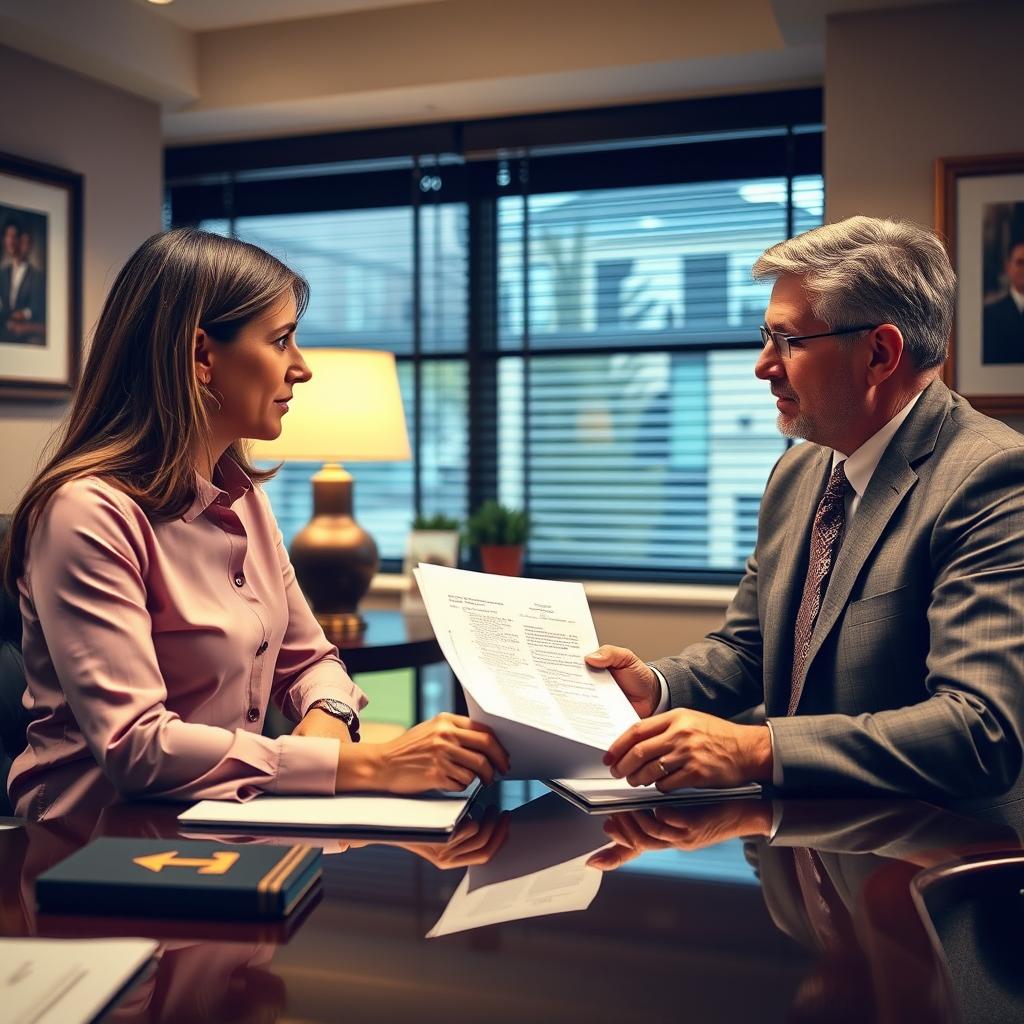
Postnup Lawyer Fairfax County, VA
You and your spouse may be discussing a postnuptial agreement—sometimes called a postnup—to clarify financial rights and responsibilities within your marriage. Maybe you have started a business, inherited assets, or simply want certainty about how property would be divided if the relationship unravels. A properly drafted postnuptial agreement can reduce conflict and protect both parties. In Fairfax County, these contracts must meet specific requirements under Virginia law to be enforceable, and navigating those requirements without legal guidance can create risks that the agreement later fails to achieve its purpose. Law Offices Of SRIS, P.C. Concentrates its family law practice on representing clients throughout Fairfax, Burke, Centreville, Chantilly, Herndon, Reston, McLean, Vienna, Tysons, Oakton, Springfield, Annandale, and the surrounding Northern Virginia communities. Mr. Sris and his Of Counsel team bring over 28 years of experience to postnuptial agreement matters. To discuss your situation, request a consultation at (888) 437-7747. Law Offices Of SRIS, P.C. – Advocacy Without Borders.
What a Postnuptial Agreement Means in Fairfax County
Under Virginia law, postnuptial agreements are governed by the same statutory framework as premarital agreements—the Premarital Agreement Act, found at Va. Code § 20‑147 et seq. A postnup is a contract between spouses that defines how they will handle property, debts, and certain financial obligations during the marriage and upon dissolution. Unlike a separation agreement, which is typically negotiated when the marriage is already failing, a postnuptial agreement is executed while the couple remains together and intends to stay married. It can address classification of specific assets as separate or marital, set rules for business valuation, outline spousal support terms, and even protect one spouse from the other’s separate debts.
Fairfax County Circuit Court, located at 4110 Chain Bridge Road in Fairfax, has jurisdiction over the enforcement of postnuptial agreements and any dispute arising from them in the context of a divorce or separate maintenance proceeding. Because Virginia is an equitable distribution state, the court divides marital property fairly but not necessarily equally. A valid postnuptial agreement can override the default equitable distribution factors and provide the spouses with the certainty of a negotiated outcome. To be enforceable, however, the agreement must be entered into voluntarily, be supported by full and fair disclosure of each party’s financial circumstances, and must not be unconscionable at the time of execution. Fairfax County’s family docket sees a significant number of high-asset cases involving tech professionals, government contractors, and business owners, where a carefully drafted postnup can be essential to protecting individual and family wealth.
How Mr. Sris and His Of Counsel Handle Postnuptial Agreement Cases
Mr. Sris and his Of Counsel approach each postnuptial agreement matter with the understanding that it is both a legal document and a sensitive family conversation. The process typically begins with a confidential consultation where you explain your goals—whether you want to safeguard a business, designate inherited property as separate, or address future spousal support. The attorney then reviews the assets and debts at issue and explains how Virginia law would treat those items absent an agreement. From there, counsel drafts a proposed agreement that reflects the couple’s intentions while satisfying the statutory requirements for enforceability.
Negotiation and revision are common. Each spouse is encouraged to have independent legal counsel, and Mr. Sris and his Of Counsel can represent one party throughout the process while the other party works with separate counsel. If complications arise—such as valuation of a closely held business or retirement accounts—the team coordinates with forensic accountants and financial professionals whose analysis supports the agreement’s terms. Once both parties sign, the agreement is executed and preserved. Should a divorce or enforcement dispute later arise, the same attorneys are positioned to litigate the agreement’s validity in Fairfax County Circuit Court. Every step is tailored to the unique circumstances of the marriage and to Virginia’s legal standards.
About Mr. Sris and His Of Counsel Team
Mr. Sris, Owner and Founder of Law Offices Of SRIS, P.C., is a former prosecutor who has concentrated his practice on family law since founding the firm in 1997. He is admitted in Virginia, Maryland, the District of Columbia, New Jersey, and New York, and maintains an active presence in Fairfax County courts. His legislative experience includes testifying before the Virginia House Courts of Justice Committee in support of 2019 HB 635 (chief patron Del. David Bulova).
Mr. Sris is joined by a team of experienced Of Counsel attorneys. Collectively, Mr. Sris and his Of Counsel bring over 120 years of combined legal experience with 4,739+ documented firm-wide results. Results may vary. Every family law matter receives attentive, multi-jurisdictional perspective, and the firm’s collaborative structure ensures that clients benefit from the collective knowledge of the practice group while Mr. Sris remains actively involved in case strategy.
Frequently Asked Questions
What is a postnuptial agreement in Virginia?
A postnuptial agreement is a legally binding contract between spouses that clarifies property rights, debt allocation, and spousal support terms in the event of divorce or separation, executed after the marriage has taken place. In Virginia, the Premarital Agreement Act (Va. Code § 20‑147 et seq.) authorizes such agreements and sets the standards for enforceability. Unlike a separation agreement, which is reached when the marriage is already breaking down, a postnup is designed for a couple who intend to remain married but want to establish financial clarity. It can identify specific assets as separate property, waive or limit spousal support, and outline how a business or professional practice will be valued if the marriage ends. For the agreement to hold up in Fairfax County Circuit Court, it must be voluntary, made with full financial disclosure, and free from unconscionable terms.
How does a postnup differ from a prenuptial agreement?
The key difference is timing: a prenuptial agreement is signed before the wedding, while a postnuptial agreement is signed after the marriage has already occurred. Beyond that, both are governed by the same Virginia statute and are evaluated under identical enforceability standards. A postnup may respond to changed circumstances that the couple did not anticipate before the wedding—such as a career change, an inheritance, or the launch of a business. Because the spouses are already married when the postnup is drafted, Virginia courts may scrutinize the negotiation process more closely to ensure that neither party felt coerced and that the agreement reflects a genuine meeting of the minds.
Does a postnuptial agreement need to be filed with a court to be valid?
No; a postnuptial agreement does not need to be filed with a Fairfax County court or any Virginia court to be valid and enforceable between the spouses. The agreement is a private contract. It becomes relevant in court only if one party seeks to enforce or challenge it during a divorce or separate maintenance proceeding. At that point, the judge will review the agreement for compliance with the Premarital Agreement Act. Proper execution—both signatures, notarization if desired, and retention of the original—is recommended so that the document is available if needed. Many couples keep the signed agreement with their estate-planning documents or in a safe-deposit box.
Can a postnuptial agreement decide child custody or child support?
A postnuptial agreement cannot bind a Virginia court on child custody or child support; those issues remain governed by the trusted‑interest‑of‑the‑child standard. The court retains authority to determine custody, visitation, and support regardless of what the agreement says. Spousal support, property division, and debt allocation, however, can be addressed in the postnup and will generally be enforced if the agreement meets the statutory requirements. Parents who want to address future parenting arrangements may still include their wishes in the agreement as a statement of intent, but the court is not obligated to follow them. India is not a signatory to the 1980 Hague Convention on Civil Aspects of International Child Abduction.
What should I bring to a first meeting about a postnuptial agreement?
You should bring a list of all assets and debts held by each spouse, any existing business or partnership agreements, recent tax returns, and a summary of your financial goals for the agreement. The attorney will want to understand the full financial picture—real estate, retirement accounts, investment portfolios, closely held business interests, and any separate property you claim. Having these details ready allows counsel to assess how Virginia’s equitable distribution rules would apply absent the postnup and to draft provisions that accurately reflect your intentions. The initial consultation is confidential and focused on gathering facts, not on pressuring either spouse to sign anything.
What if my spouse does not want to sign a postnuptial agreement?
No one can be compelled to sign a postnuptial agreement; if your spouse is unwilling, the agreement simply will not be executed. In that situation, the default rules of Virginia equitable distribution and spousal support law will apply if the marriage later ends. An attorney can still help you explore other options—such as a marital trust, a separate property agreement, or an informal memorandum of understanding—but a postnup requires mutual consent. The attorney can also facilitate a conversation about the benefits the agreement would offer both parties, which may help address concerns and move the discussion forward.
For authoritative guidance on the statutory framework, see the Virginia Premarital Agreement Act (Va. Code § 20‑147 et seq.) and court information at Fairfax County Circuit Court.
Attorney advertising. Prior results do not guarantee a similar outcome. Results may vary.
Case results depend on a variety of factors unique to each case.