
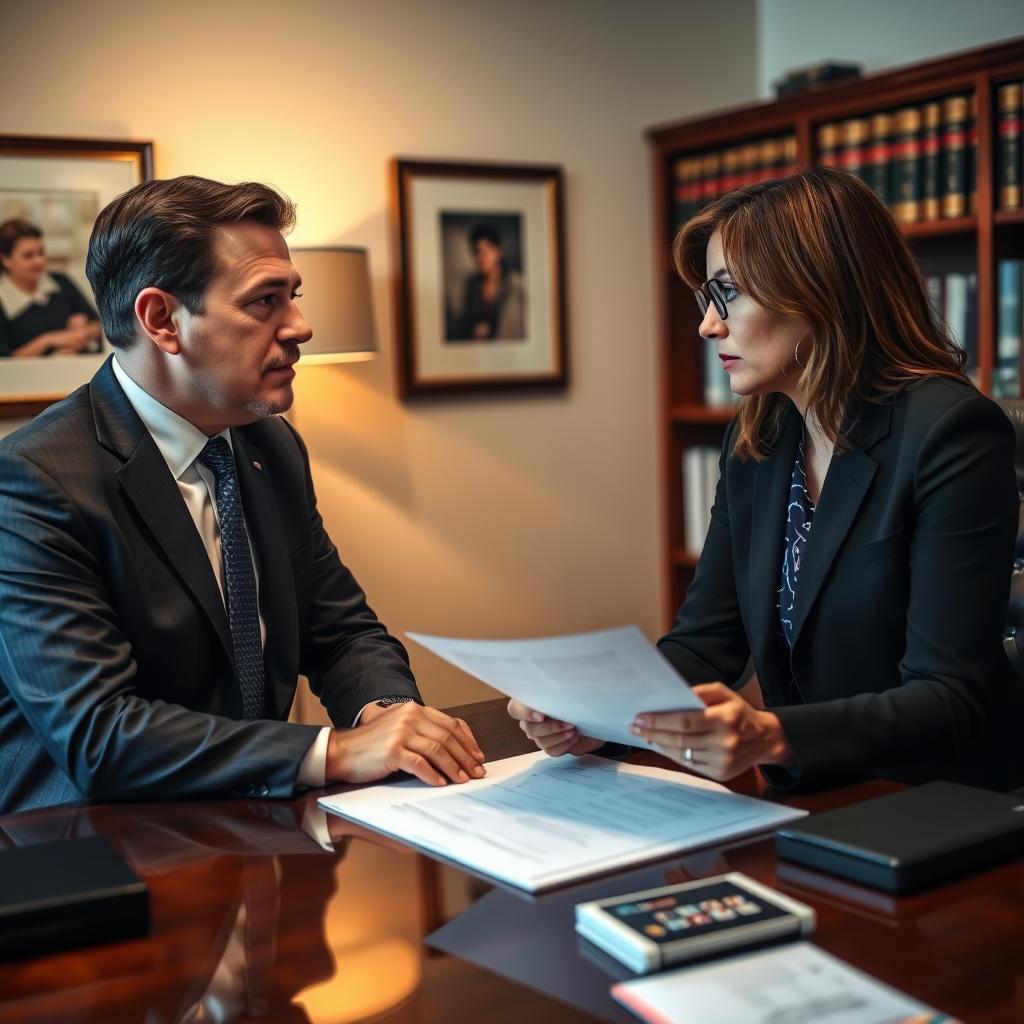
Fault Based Divorce Lawyer Falls Church, VA
When a marriage ends because of misconduct by one spouse, Virginia law allows a fault based divorce under Va. Code § 20‑91. In Falls Church, these matters are heard in the Falls Church Circuit Court, which has exclusive original jurisdiction over all divorces, and the Falls Church Juvenile & Domestic Relations District Court, which addresses related custody, support, and protective order issues. Filing on fault grounds — such as adultery, cruelty, willful desertion, or a felony conviction — can affect how marital property is divided under equitable distribution, whether spousal support is awarded, and how quickly the divorce may be granted. For more than 27 years, Mr. Sris and his Of Counsel team at Law Offices Of SRIS, P.C. have represented individuals in fault based divorce cases throughout Northern Virginia, including Falls Church. To discuss your situation and schedule a consultation, call (888) 437‑7747. Law Offices Of SRIS, P.C. — Advocacy Without Borders.
What Fault Based Divorce Means in Falls Church, Virginia
The Falls Church Circuit Court, located at 300 Park Avenue, Suite 151W, Falls Church, VA 22046, handles all divorce complaints filed by Falls Church residents. Under Virginia Code § 20‑91, a spouse may seek a divorce on several fault grounds: adultery; cruelty or reasonable apprehension of bodily harm; willful desertion or abandonment for at least one year; and sentencing to confinement for more than one year following a felony conviction. Unlike a no‑fault divorce, which requires a statutory separation period before filing, certain fault grounds — most notably adultery — do not require any waiting period. The court will also examine whether the marital misconduct contributed to the dissolution of the marriage, because Virginia is an equitable distribution state under Va. Code § 20‑107.3. The judge considers the circumstances and factors that contributed to the breakdown, and property may be divided in a manner that reflects those findings.
In addition to the Circuit Court, the Falls Church Juvenile & Domestic Relations District Court addresses standalone custody, visitation, child support, and protective order matters tied to family disputes. A fault based divorce filing does not automatically decide these collateral issues, but the evidence supporting the fault ground — particularly in cases involving cruelty or felony conduct — can influence custody determinations under the trusted‑interests factors set out in Va. Code § 20‑124.3. Every case is decided on its own facts, and the specific effect of a fault ground on equitable distribution, spousal support, and child‑related issues depends on the evidence presented. Mr. Sris and his Of Counsel work with clients to understand how Virginia’s statutory framework applies to the particular circumstances of a Falls Church family law matter.
How Mr. Sris and His Of Counsel Handle Fault Based Divorce Cases
When a client decides to proceed on fault grounds, the first step is a thorough review of the factual basis for the claim and the evidence available to support it. Mr. Sris and his Of Counsel work with the client to identify documentary records, witness statements, and other proof that may be relevant under the applicable fault ground. They then prepare and file the complaint in the Falls Church Circuit Court, ensuring that all procedural requirements are satisfied and that the pleading meets the specificity required by Virginia pleading standards. Because fault allegations can be vigorously disputed, discovery — including depositions, interrogatories, and requests for production of documents — is often a critical phase. The team uses discovery to gather the facts needed to prove or defend against the asserted fault ground while protecting the client’s privacy interests as much as the litigation process allows.
Throughout the case, Mr. Sris and his Of Counsel pursue opportunities for resolution through negotiated property settlement agreements or mediation when both parties are willing. Mediation is available but not mandatory in Virginia, and many fault based divorces settle before trial. If settlement is not achievable, the team prepares for trial in the Falls Church Circuit Court, presenting evidence and examining witnesses in accordance with Virginia rules of evidence. Where complex financial matters — such as business valuation, tracing of separate assets, or forensic accounting — are necessary to address equitable distribution, the firm works with qualified financial professionals as the case requires. Every step of the process is managed with attention to the local rules and practices of the Falls Church courts and the broader Seventeenth Judicial District.
About Mr. Sris and His Of Counsel Team
Mr. Sris, Owner and Founder of Law Offices Of SRIS, P.C., has practiced family law since 1997. A former prosecutor, he brings a thorough understanding of courtroom advocacy and evidence presentation to every fault based divorce matter. Mr. Sris is admitted in Virginia, Maryland, the District of Columbia, New Jersey, and New York, and he has represented clients across Northern Virginia, including in Falls Church courts. In 2019, he testified before the Virginia House Courts of Justice Committee in support of HB 635 (chief patron Del. David Bulova) — a bill addressing equitable distribution procedures — reflecting his sustained engagement with Virginia family law policy.
Mr. Sris and his Of Counsel bring over 120 years of combined legal experience to family law matters, with 4,739+ documented firm-wide results. Results may vary. Past outcomes do not guarantee a similar result. The Of Counsel team includes attorneys with substantial backgrounds in litigation and courtroom practice, collectively serving clients at the Falls Church Circuit Court and the Falls Church Juvenile & Domestic Relations District Court. Because every attorney who works on a family law case is engaged as Of Counsel — not as an associate or partner — each client benefits from the attention and insight of seasoned legal professionals collaborating under one practice.
Frequently Asked Questions
What are the fault grounds for divorce in Virginia?
Virginia recognizes adultery, cruelty, desertion, and felony conviction as fault grounds under Va. Code § 20‑91. Adultery requires clear and convincing evidence and does not demand a separation period before filing. Cruelty means conduct that causes reasonable apprehension of bodily hurt or makes cohabitation unsafe. Desertion is willful abandonment for at least one year. A felony conviction resulting in confinement for more than one year can also serve as a fault ground. Each ground has distinct evidentiary requirements; an experienced family law attorney can explain how the specific facts of a marriage may support a fault based filing in Falls Church Circuit Court.
How does adultery affect a Falls Church divorce case?
Adultery can eliminate the separation period required for a no‑fault divorce and may influence property division. Because Virginia is an equitable distribution state, the court may consider the adulterous conduct as one of the circumstances that contributed to the dissolution of the marriage when deciding how marital property and debt should be divided. A spouse who proves adultery is generally not required to wait any separation period before filing. However, the adultery must be proved by clear and convincing evidence, and a finding of adultery can also affect spousal support eligibility. An attorney can help evaluate the available proof and the strategic implications of an adultery ground in a Falls Church case.
Can I file for fault based divorce without a separation agreement?
Yes, a fault based divorce does not require a separation agreement or a waiting period if the ground is proved. Unlike a no‑fault divorce, which requires a period of separation — one year in standard cases or six months if the parties have a signed separation agreement and no minor children — a divorce on adultery, cruelty, or other fault grounds can proceed immediately once jurisdiction and residency requirements are met. Even when fault is alleged, however, the parties may still choose to resolve property and support issues through a separation agreement. The Falls Church Circuit Court can grant a divorce on fault grounds and incorporate a voluntarily signed agreement covering financial and child‑related issues.
How does a fault based divorce affect child custody in Falls Church?
Custody decisions in Falls Church are made under the trusted‑interests factors in Va. Code § 20‑124.3, and a finding of fault does not automatically decide custody. The court examines ten specific factors, including each parent’s relationship with the child, the child’s needs, and any history of family abuse. While a fault ground like cruelty or a felony conviction that suggests a risk to the child may influence the analysis, adultery alone, without a showing of harm to the child, does not control. Falls Church Juvenile & Domestic Relations District Court hears standalone custody cases, while custody within a divorce is decided by the Circuit Court. An experienced attorney can help present evidence that protects your parental rights.
Do I need an attorney for a fault based divorce in Virginia?
You are not required to hire an attorney, but fault based divorces involve complex evidence, procedural rules, and potentially substantial financial stakes. Proving a fault ground demands specific legal argument and the collection of admissible evidence. The opposing spouse may vigorously dispute the allegations, and the Falls Church Circuit Court holds both parties to the same standards as any other civil litigant. Additionally, the outcome of a fault finding can reshape equitable distribution, spousal support, and even custody arrangements. Consulting an experienced family law practitioner early can help you understand the strength of your position and avoid procedural pitfalls.
For additional family law resources in nearby communities, visit our pages:
- Family Law Lawyer in Fairfax County
- Family Law Attorney in Fairfax City
- Family Law Representation in Prince William County
- Family Law Counsel in Manassas
- Family Law Services in Manassas Park
Authoritative Virginia family law sources:
- Virginia Code Title 20 — Domestic Relations
- Falls Church General District Court
- Virginia’s Judicial System
Attorney advertising. Prior results do not guarantee a similar outcome. Results may vary.
Case results depend on a variety of factors unique to each case.