
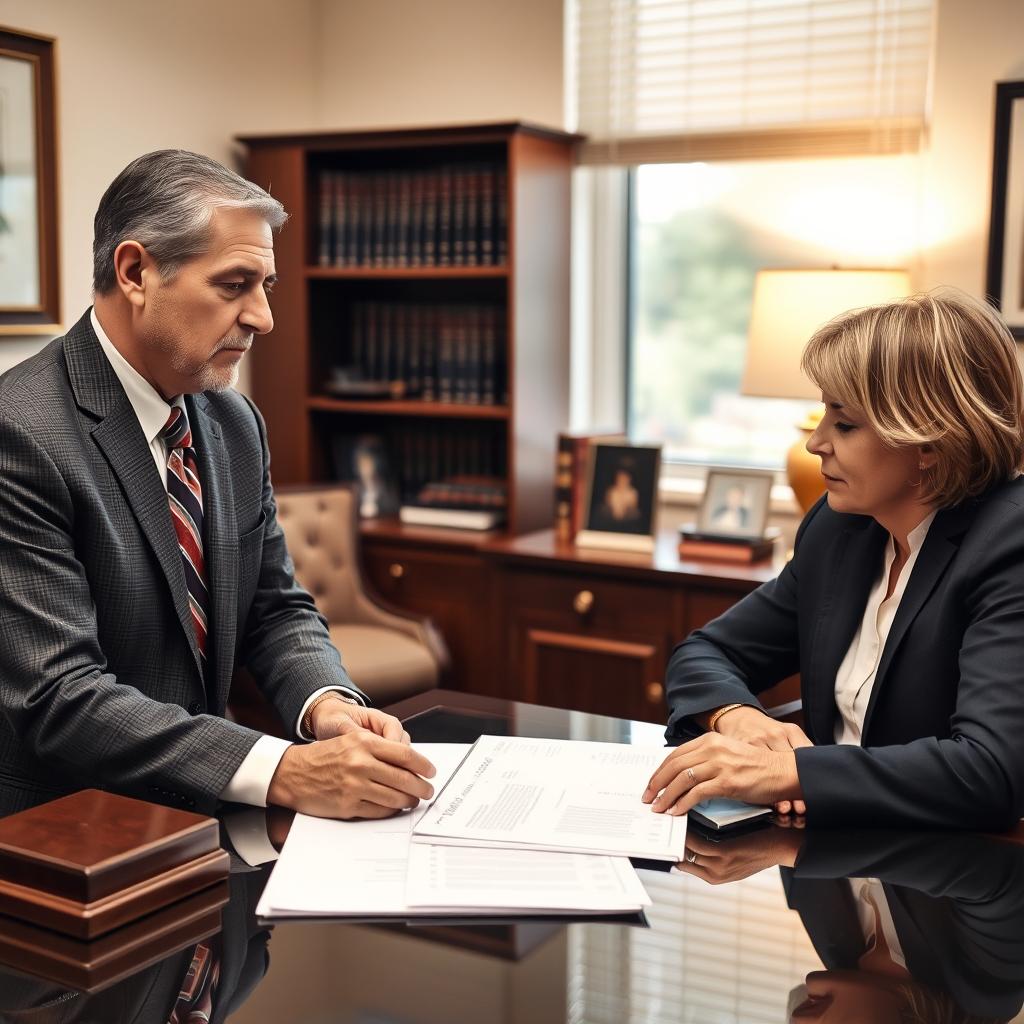
Equitable Distribution Lawyer Prince William County, VA
When a marriage ends in Prince William County, Virginia, the division of property does not automatically split everything down the middle. Virginia follows the principle of equitable distribution under Va. Code § 20-107.3, which means marital assets and debts are divided fairly—though not necessarily equally—after the court considers a list of statutory factors. For couples in Manassas, Woodbridge, Dale City, Dumfries, Gainesville, Haymarket, Lake Ridge, and Occoquan, the Prince William County Circuit Court at 9311 Lee Avenue, Suite 230, Manassas handles all equitable distribution matters as part of the divorce process. Mr. Sris and his Of Counsel team at Law Offices Of SRIS, P.C. Concentrate their family law practice on helping individuals work through the classification, valuation, and division of marital property, including complex assets such as business interests, retirement accounts, and investment portfolios. If you are considering divorce or need to understand your rights to marital property in Prince William County, contact the firm at (888) 437-7747 to request a consultation. Law Offices Of SRIS, P.C. – Advocacy Without Borders.
What Equitable Distribution Means in Prince William County
In Virginia, the term “equitable distribution” refers to the process a judge uses to divide marital property when spouses cannot reach their own agreement. The Prince William County Circuit Court is the court of record for divorce and all property division under Virginia Code § 20-96. Before the court can distribute anything, it must classify each asset and debt as marital, separate, or hybrid. Marital property generally includes everything acquired by either spouse during the marriage, other than gifts or inheritances received individually. Separate property—owned before the marriage or acquired by gift or inheritance—remains with the original owner. Once classification is complete, the court values the marital estate, then determines an equitable division after weighing the eleven factors set out in Va. Code § 20-107.3.
Those factors include the monetary and non-monetary contributions of each party to the well-being of the family and to the acquisition of assets, the length of the marriage, the ages and health of the spouses, the circumstances that led to the end of the marriage, how and when particular property was obtained, the debts and liabilities of each party, the liquid or non-liquid character of the marital property, and the tax consequences of any proposed division. Because Prince William County is located within the Thirty-First Judicial District and has a diverse population that includes military families and federal employees, property division often involves interplay with federal retirement systems, Thrift Savings Plan accounts, and VA benefits. Mr. Sris and his Of Counsel work with clients throughout the county to present a clear picture of the marital estate to the court, and when possible, to reach a negotiated property settlement agreement that the judge can incorporate into a final divorce decree.
How Mr. Sris and His Of Counsel Handle Equitable Distribution Cases
Equitable distribution matters in Prince William County begin with a thorough identification and cataloging of all assets and debts. Mr. Sris and his Of Counsel guide clients through the disclosure process and, when necessary, collaborate with forensic accountants, business valuators, and pension attorneys to determine the full scope and value of the marital estate. The goal is to assemble an accurate financial record that supports the client’s position, whether the matter is headed for negotiation, mediation, or trial before the Circuit Court.
The team then applies the eleven statutory factors to the specific facts of the case. For a long-term marriage with significant co-mingled assets, the distribution analysis differs from a shorter marriage where parties kept finances largely separate. Where a family business is involved, the approach may involve a valuation report and a careful analysis of whether the business is marital or separate property. Mr. Sris and his Of Counsel also handle the division of retirement accounts, stock options, and deferred compensation plans, areas where attention to detail is essential to avoid unexpected tax consequences. Because Virginia permits a no‑fault divorce after a six‑month or one‑year separation—depending on whether a separation agreement is signed and whether minor children are involved—the equitable distribution process often moves in parallel with the separation and divorce timeline, giving parties time to negotiate a comprehensive marital settlement agreement.
About Mr. Sris and His Of Counsel Team
Mr. Sris, Owner and Founder of Law Offices Of SRIS, P.C., has practiced law since 1997 and is admitted in Virginia, Maryland, the District of Columbia, New Jersey, and New York. A former prosecutor, he brings firsthand courtroom experience to every matter the firm handles. Mr. Sris testified before the Virginia House Courts of Justice Committee in support of 2019 HB 635 (chief patron Del. David Bulova), which revised subsection (g) of the equitable distribution statute. His familiarity with the statute’s legislative history and his multi‑state practice allow him and his Of Counsel to work with divorcing spouses whose assets cross state lines or involve complex property interests.
Mr. Sris and his Of Counsel bring over 120 years of combined legal experience and 4,739+ documented firm-wide results. Results may vary. Together, the team concentrates on family law, including equitable distribution, serving clients throughout Prince William County from the Fairfax location at 4008 Williamsburg Court, Fairfax, VA 22032.
Frequently Asked Questions
What is equitable distribution in Virginia?
Equitable distribution in Virginia is the process by which a court divides marital property and debts fairly—not necessarily equally—after considering eleven statutory factors. The judge classifies assets as marital, separate, or hybrid, values them, and then decides how to apportion the marital estate between the spouses. Separate property, such as assets owned before the marriage or received by gift or inheritance, is generally not subject to division. The goal is a fair result based on the couple’s specific financial history and contributions. For guidance on how Virginia law applies to your situation, contact Law Offices Of SRIS, P.C. at (888) 437-7747.
How is property divided in a divorce in Prince William County?
Property division in a Prince William County divorce follows Virginia equitable distribution law, with the Circuit Court deciding a fair division if the spouses cannot agree. The court looks at each spouse’s contributions, the length of the marriage, the source of the property, and other factors listed in Va. Code § 20-107.3. Couples often resolve property division through a signed separation agreement that the judge approves as part of the final divorce decree. When an agreement is not possible, the judge hears evidence, values the marital estate, and enters an order distributing the property. Reach Law Offices Of SRIS, P.C. at (888) 437-7747 to discuss your options.
What factors does the Virginia court consider for equitable distribution?
Virginia courts consider eleven specific factors when dividing marital property, including each spouse’s monetary and non-monetary contributions to the family, the length of the marriage, the age and health of each party, and the tax consequences of a proposed division. Other factors are the circumstances that contributed to the dissolution of the marriage, how and when particular property was acquired, the debts and liabilities of each spouse, and the liquid or non-liquid nature of the marital property. The court weighs all factors collectively; no single factor determines the outcome. For a thorough review of your marital estate, reach Mr. Sris and his Of Counsel at (888) 437-7747.
Do I need a lawyer for equitable distribution in Prince William County?
You are not legally required to have a lawyer to handle equitable distribution in Prince William County, but the process involves complex asset valuation, classification, and statutory analysis where experienced legal guidance can help protect your financial interests. If your marriage involves a business, retirement accounts, real property, or significant debt, an attorney can work with attorneys to build an accurate picture of the marital estate and negotiate on your behalf. Mr. Sris and his Of Counsel offer consultations by appointment; contact the firm at (888) 437-7747 to learn more.
Can we agree on property division outside of court?
Yes, spouses in Virginia can negotiate and sign a property settlement agreement that resolves all equitable distribution issues without a trial, and the court will incorporate that agreement into the final divorce decree if it is fair and voluntarily made. This approach often reduces the time and expense associated with litigating property division. Even when both parties are cooperative, having each side represented by counsel ensures that the agreement addresses all marital assets and debts appropriately. For assistance drafting or reviewing a separation agreement, reach Law Offices Of SRIS, P.C. at (888) 437-7747.
How long does equitable distribution take in Prince William County?
The timeline for equitable distribution in Prince William County depends on whether the divorce is uncontested or contested, the complexity of the marital estate, and the court’s schedule. In an uncontested case with a signed separation agreement, equitable distribution can be resolved at the same time as the divorce, often within a few months after meeting Virginia’s separation requirement. Contested cases that require discovery, experienced attorney valuations, and a trial can take longer. Mr. Sris and his Of Counsel work to move matters forward efficiently while protecting each client’s rights. For a timeline estimate based on your specific circumstances, call (888) 437-7747 to schedule a consultation.
Learn more about family law representation in neighboring counties:
Fairfax County |
Stafford County |
Fauquier County |
Loudoun County |
Arlington County
Primary sources:
Virginia Code Title 20 (Domestic Relations) |
Virginia Circuit Courts |
Virginia State Bar Attorney Search
Attorney advertising. Prior results do not guarantee a similar outcome. Results may vary. Case results depend on a variety of factors unique to each case. Engaging Law Offices Of SRIS, P.C. Requires a signed engagement agreement. Law Offices Of SRIS, P.C., founded in 1997, serves clients across Virginia, Maryland, the District of Columbia, New Jersey, and New York.