
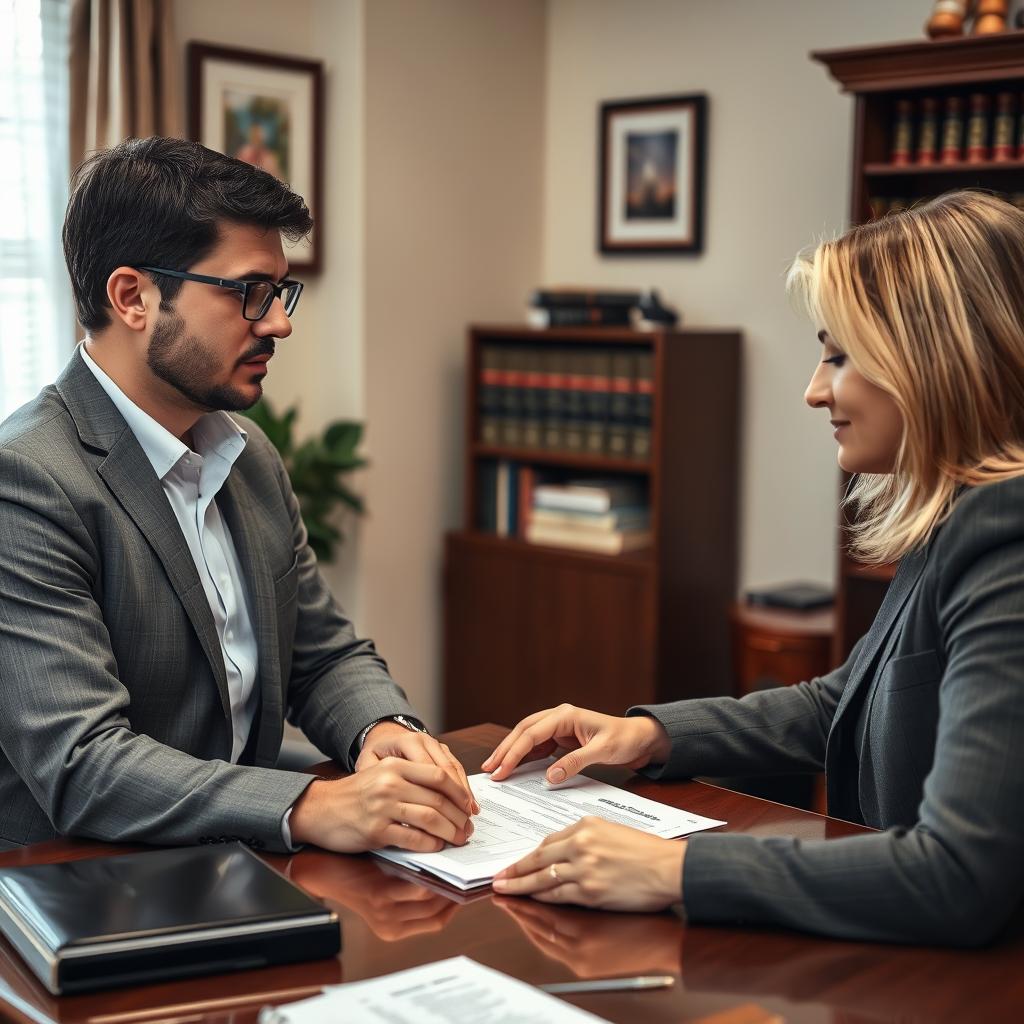
Paternity Test Lawyer Fairfax, VA
Paternity testing is often the first step toward securing legal rights and responsibilities involving a child. When a parent or potential parent in Fairfax, Virginia, needs to establish or challenge paternity, the process involves specific court procedures, statutory standards under Va. Code § 20-49.1 et seq., and a careful presentation of evidence. Law Offices Of SRIS, P.C. Concentrates its family law practice on representing individuals in paternity matters before the Fairfax County courts. Mr. Sris and his Of Counsel team bring over 120 years of combined legal experience and 4,739+ documented firm-wide results to the table. Results may vary. For a consultation, reach Law Offices Of SRIS, P.C. at (888) 437-7747. Law Offices Of SRIS, P.C. – Advocacy Without Borders.
What Paternity Test Cases Mean in Fairfax, Virginia
In Virginia, paternity is the legal establishment of a father-child relationship. A paternity test—typically a DNA-based genetic test—provides the scientific evidence needed to prove or disprove biological parentage. Under Virginia law, a man is presumed to be the father in certain situations, but when parentage is in question, a court-ordered or voluntary paternity test can resolve the issue. Fairfax County, home to over a million residents, sees a significant number of family law cases each year. Many involve parents who were never married, cases where a husband disputes paternity of a child born during the marriage, or situations where a father seeks to establish his parental rights to gain custody or visitation.
Fairfax County paternity cases are typically heard in the Fairfax County Juvenile and Domestic Relations District Court (J&DR Court), which handles matters involving custody, visitation, and support. When paternity is intertwined with divorce proceedings, the Fairfax County Circuit Court may also adjudicate the issue as part of equitable distribution or spousal support determinations. The J&DR Court is located at 4110 Chain Bridge Road, Suite 210, Fairfax, VA 22030. The Circuit Court is at the same address but in a different courtroom. Both courts operate under the Nineteenth Judicial District. Because paternity affects child support obligations, inheritance rights, and medical history, the outcome of a test carries significant legal weight. It is essential to work with counsel who understands the local court practices and the interplay between genetic testing and the statutory framework.
How Mr. Sris and His Of Counsel Handle Paternity Cases
When a client approaches Law Offices Of SRIS, P.C. about a paternity matter in Fairfax, the firm first evaluates the underlying factual circumstances. The team reviews whether a presumption of paternity already exists—for example, if the child was born during a marriage or if the potential father has acknowledged paternity in writing. If the question remains unresolved, the firm discusses the available paths: voluntary acknowledgment of paternity through the Virginia Department of Social Services, a court-ordered DNA test, or a private genetic test that can be admitted into evidence. Mr. Sris and his Of Counsel then guide the client through each procedural step, from filing the appropriate petition in J&DR Court to ensuring the genetic testing laboratory meets Virginia’s chain-of-custody requirements.
In contested paternity cases, the team prepares evidence and witness testimony to present a clear picture to the judge. This may include medical records, financial documents, and testimony from the child’s other parent. The firm’s approach emphasizes clarity and direct advocacy. Paternity findings can be challenged on procedural grounds, and the team is experienced in identifying issues that may affect the admissibility or weight of genetic evidence. Throughout the process, Mr. Sris and his Of Counsel work to achieve a resolution that protects the client’s parental rights and the child’s best interests—the guiding standard under Virginia law. However, every case is different, and the specific steps depend on the unique facts of the matter.
About Mr. Sris and His Of Counsel Team
Mr. Sris, Owner and Founder of Law Offices Of SRIS, P.C., has practiced family law since the firm’s founding in 1997. He is a former prosecutor with experience in trial work and is admitted to practice in Virginia, Maryland, the District of Columbia, New Jersey, and New York. Mr. Sris testified before the Virginia House Courts of Justice Committee in support of 2019 HB 635 (chief patron Del. David Bulova). He concentrates his practice on complex family law matters, including paternity disputes that involve intricate factual and legal questions. Mr. Sris and his Of Counsel team bring over 120 years of combined legal experience and 4,739+ documented firm-wide results to each case, offering insight drawn from thousands of documented matters. Results may vary.
Frequently Asked Questions
Who can request a paternity test in Fairfax, Virginia?
In Fairfax, a paternity test can be requested by the child’s mother, the alleged father, the child through a guardian, or the Virginia Division of Child Support Enforcement. The court may also order testing on its own motion when paternity is at issue. Under Va. Code § 20-49.1 et seq., the court can direct the mother, child, and alleged father to submit to genetic testing. The test results, if they show a probability of paternity of 98% or higher, create a presumption of paternity under the statute. A party who refuses to submit to court-ordered testing may face legal consequences, including the court drawing an adverse inference. To discuss the specifics of your matter, contact Law Offices Of SRIS, P.C. at (888) 437-7747.
How does the paternity testing process work in Fairfax County courts?
The process typically begins by filing a petition to establish paternity in the Fairfax County Juvenile and Domestic Relations District Court, followed by a court order for genetic testing through an accredited laboratory. Once the test is completed, the results are filed with the court. If the test establishes paternity, the court then determines legal parentage and may address custody, visitation, and child support in the same proceeding. If the test excludes paternity, the alleged father is relieved of legal obligations. Virginia courts follow specific chain-of-custody and laboratory accreditation standards; the court must be satisfied that the genetic testing was properly conducted before admitting the results. The timeline varies by court calendar and the parties’ cooperation. For guidance on your specific situation, reach Law Offices Of SRIS, P.C. at (888) 437-7747.
Can a paternity test be done before the child is born in Virginia?
Yes, prenatal paternity testing can be performed, but Virginia courts usually wait until after the child’s birth before entering a final order of paternity. While a pregnant mother may undergo a non-invasive prenatal paternity test, the test is not typically used as the sole basis for a court determination because postnatal genetic testing is more reliable and less invasive. After the child is born, a simple cheek swab from the mother, child, and alleged father is the standard method. An experienced family law attorney can advise whether prenatal testing is advisable in your circumstances. To discuss the details of your matter, contact Law Offices Of SRIS, P.C. at (888) 437-7747.
What if the alleged father refuses a paternity test in Fairfax?
If the alleged father refuses to submit to a court-ordered paternity test in Fairfax, the court may enter a default judgment of paternity against him. Under Va. Code § 20-49.5, the court may issue an order requiring the parties to appear for genetic testing. Willful failure to comply can result in the court treating the refusal as evidence that the person is the father. Additionally, the court may proceed to determine child support and other obligations based on the available evidence. Conversely, if the mother refuses to allow testing, the court may dismiss the petition. Because a refusal carries significant legal consequences, it is important to seek legal guidance promptly. For a consultation, reach Mr. Sris and his Of Counsel at (888) 437-7747.
Does a paternity test automatically give the father custody or visitation rights in Virginia?
No, establishing paternity through a DNA test does not automatically confer custody or visitation rights; the father must separately petition the court for a custody and visitation order. Once paternity is legally established, the father gains the right to seek custody and parenting time under the trusted-interests-of-the-child standard set forth in Va. Code § 20-124.3. The court will consider factors such as the child’s relationship with each parent, the parents’ ability to cooperate, and the child’s needs. Until a court order is entered, the mother typically retains sole legal and physical custody if the parents were never married. An experienced family law attorney can help a newly adjudicated father navigate this process. For guidance on your specific situation, reach Law Offices Of SRIS, P.C. at (888) 437-7747.
How can I find a paternity test lawyer near me in Fairfax, VA?
You can research local family law attorneys who concentrate in paternity matters, read client reviews, and request a consultation to discuss your case. Look for a lawyer admitted in Virginia who is familiar with the Fairfax County court system and the statutory framework under Va. Code § 20-49.1 et seq. A face-to-face meeting allows you to assess whether the attorney’s approach aligns with your goals. Mr. Sris and his Of Counsel team maintain a Fairfax location at 4008 Williamsburg Court, Fairfax, VA 22032, and serve clients throughout Fairfax County, including Burke, Centreville, Herndon, Reston, McLean, Vienna, and surrounding communities. By appointment only. Call (888) 437-7747 to schedule a consultation.
Virginia Code Title 20 – Domestic Relations · Fairfax County Circuit Court · Fairfax County Juvenile & Domestic Relations District Court
Attorney advertising. Prior results do not guarantee a similar outcome. Case results depend on a variety of factors unique to each case. Attorney responsible for this advertising: Mr. Sris. Results may vary.